
Heel Pain Common Causes and Symptons
Posted on 12 Oct 2026 by Salma Roshan
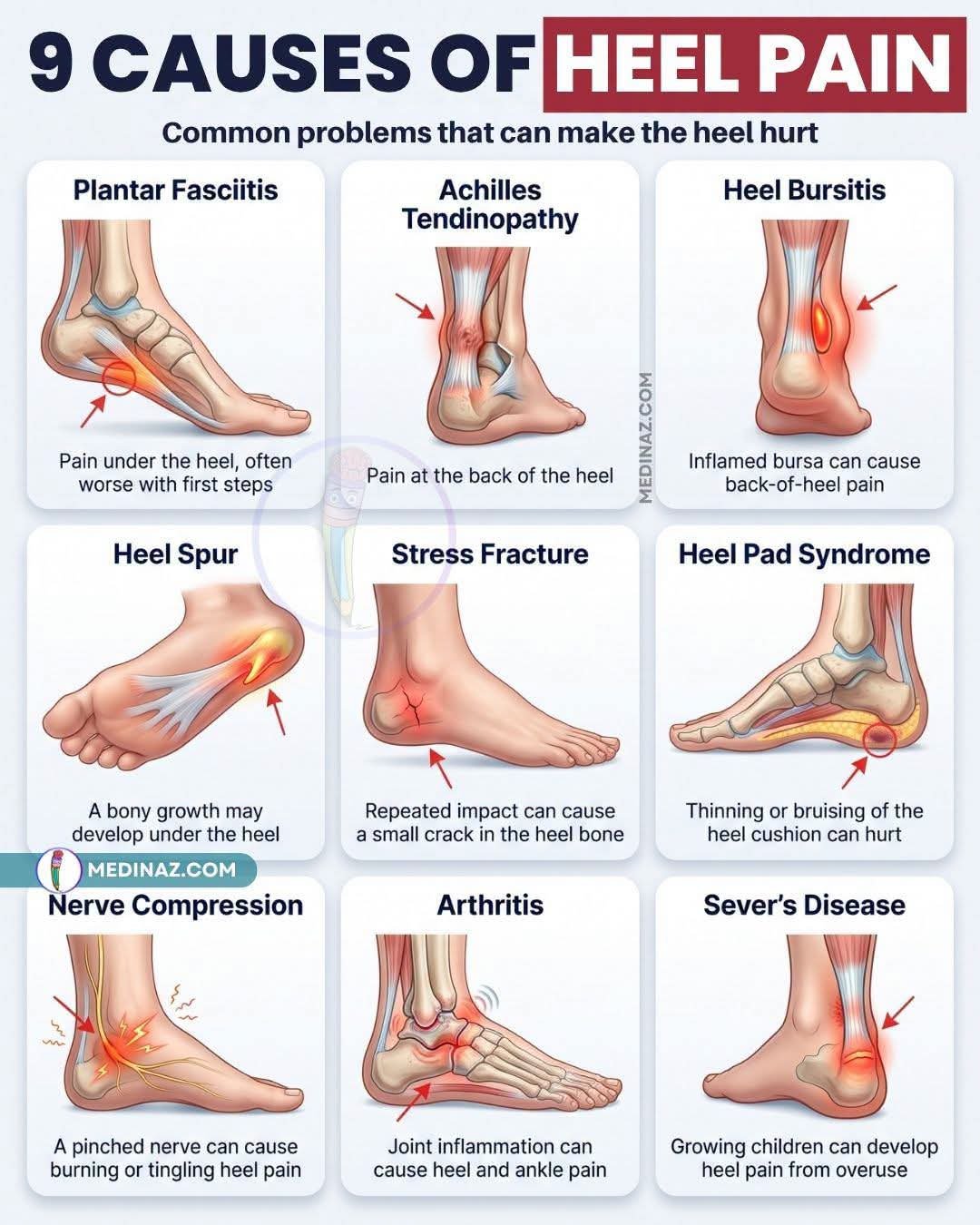 9 Causes of Heel Pain
Heel pain is common and can come from the plantar fascia, Achilles tendon, bursa, bone, nerves, or nearby joints. The location and timing of the pain often provide important clues to the cause.
⠀
🟣 1. Plantar Fasciitis
➟ One of the most common causes of heel pain
➟ Pain is usually felt under the heel, especially with the first few steps after getting out of bed or after resting
➟ Symptoms may improve after moving around, then worsen again after prolonged standing or activity
➟ Stretching, supportive footwear, and activity modification often help
⠀
🟣 2. Achilles Tendinopathy
➟ Causes pain and stiffness at the back of the heel or lower calf
➟ Often linked to running, jumping, sudden increases in exercise, or tight calf muscles
➟ Pain may be worse during or after activity
➟ Gradual strengthening and load management are important parts of treatment
⠀
🟣 3. Heel Bursitis
➟ Inflammation of a small fluid-filled sac near the back of the heel can cause pain and swelling
➟ Tight shoes or repeated pressure may aggravate symptoms
➟ The area may feel tender when touched
➟ Rest, footwear changes, and reducing friction can help
⠀
🟣 4. Heel Spur
➟ A heel spur is a bony growth on the heel bone
➟ It is often found on X-rays in people with long-term plantar fascia stress
➟ Many heel spurs cause no symptoms at all
➟ Pain is usually related more to the surrounding soft-tissue problem than the spur itself
⠀
🟣 5. Stress Fracture
➟ Repetitive impact can cause a small crack in the heel bone
➟ Pain usually worsens with walking, running, or weight-bearing
➟ Tenderness may be more localised than with plantar fasciitis
➟ Athletes or people who suddenly increase activity are at greater risk
⠀
🟣 6. Heel Pad Syndrome
➟ The natural fatty cushion under the heel can become thinned, bruised, or irritated
➟ Pain is often felt in the centre of the heel
➟ It may feel like walking on a bruise
➟ Hard surfaces and prolonged standing can make symptoms worse
⠀
🟣 7. Nerve Compression
➟ A trapped or irritated nerve can cause burning, tingling, numbness, or electric-shock-like pain
➟ Tarsal tunnel syndrome is one possible cause
➟ Symptoms may extend into the arch or sole of the foot
➟ Persistent nerve symptoms should be medically assessed
⠀
🟣 8. Arthritis
➟ Arthritis can affect joints around the heel and ankle
➟ Pain may be accompanied by stiffness, swelling, or reduced movement
➟ Causes include osteoarthritis, rheumatoid arthritis, gout, and other inflammatory conditions
➟ A suddenly hot, swollen joint needs prompt assessment
⠀
🟣 9. Sever’s Disease
➟ Sever’s disease is a common cause of heel pain in growing children and adolescents
➟ It involves irritation of the growth plate at the back of the heel
➟ Running and jumping sports often make symptoms worse
➟ Symptoms usually improve as growth progresses and with temporary activity modification
⠀
🟣 What May Help
➟ Reduce activities that clearly aggravate the pain
➟ Wear supportive, well-fitting footwear
➟ Avoid prolonged barefoot walking on hard surfaces
➟ Gentle calf and plantar fascia stretching may help some causes
➟ Ice may reduce pain after activity
➟ Heel cups, insoles, or physiotherapy may be useful depending on the diagnosis
⠀
🟣 Seek Medical Advice If
➟ Heel pain lasts more than a few weeks
➟ Pain is worsening despite rest and footwear changes
➟ You develop numbness, tingling, or weakness
➟ The heel becomes significantly swollen, red, or warm
➟ You have diabetes or poor circulation and develop new foot pain or skin damage
⠀
🟣 Seek Urgent Medical Care If
➟ You cannot bear weight after an injury
➟ You heard or felt a sudden snap or pop at the back of the ankle
➟ The foot becomes very red, hot, swollen, or you develop fever
➟ There is an open wound, blackened skin, or rapidly worsening pain
⠀
Medical disclaimer: This information is for general educational purposes only and does not replace professional medical advice, diagnosis, or treatment. Persistent, severe, or unexplained heel pain should be assessed by a qualified healthcare professional.